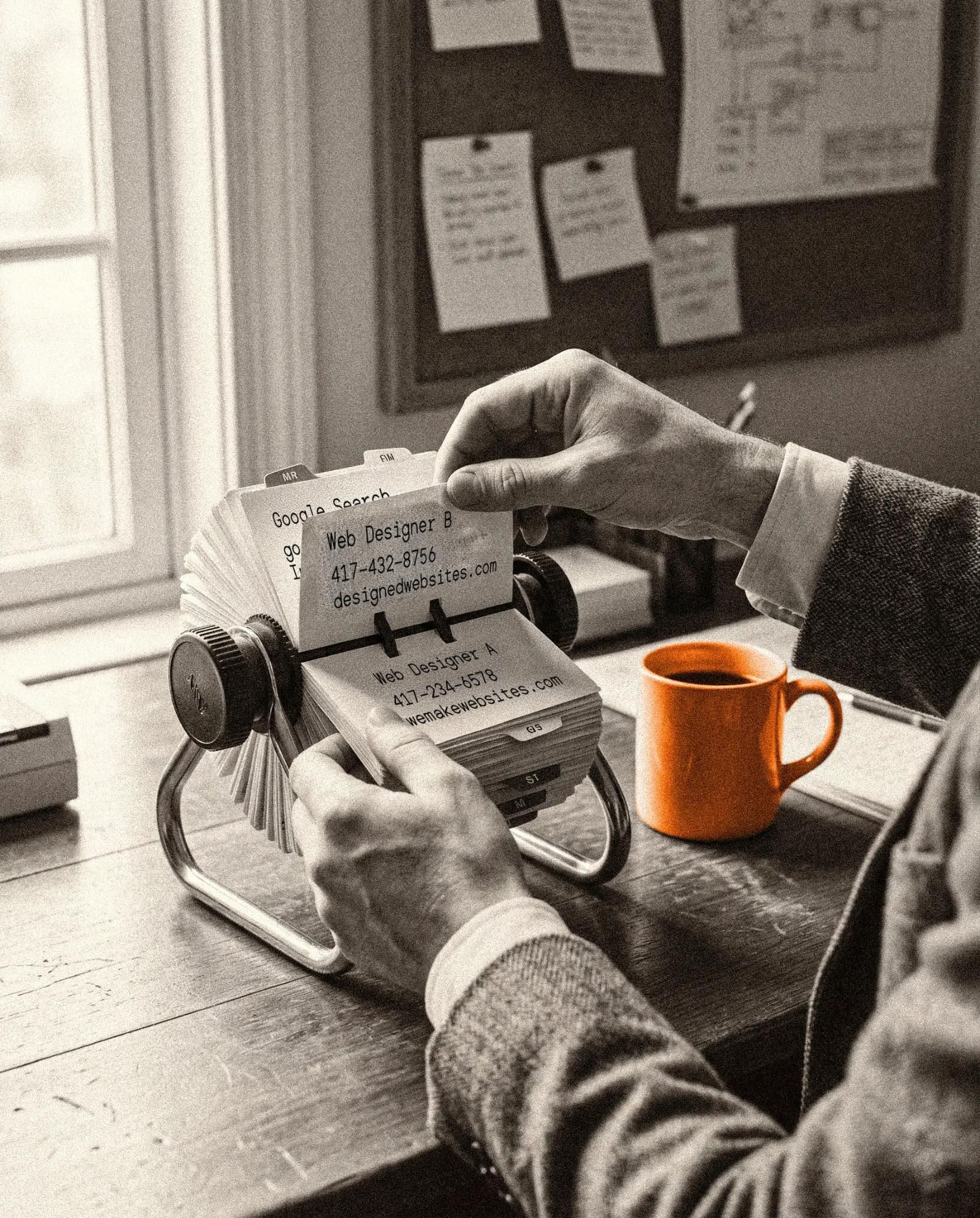
Hiring a Web Designer in Springfield, MO: What to Know
7 min
You need a new website. You've started looking around, maybe asked a few people for recommendations, maybe searched "web designer Springfield MO" and ended up with a mix of agencies, freelancers, and companies that seem to do a little bit of everything.
Now you're trying to figure out who to trust with something that matters to your business.
This post is meant to help you sort through that. Not a sales pitch, just what I'd tell a friend who asked.
Why the Right Hire Matters
A website isn't a logo with pages attached. It's a different discipline.
Graphic design is about how things look. Web design includes that, but it also involves how things work. How users navigate. How fast the site loads. How search engines read and rank it. Which platform it's built on and what that means for you three years from now.
A designer who does great print work or brand identity may not understand the technical side of the web. That's not a knock on them. It's just a different skill set.
When you hire someone who doesn't specialize in websites, you often end up paying twice. Once for the original site, and again when you hire someone else to fix or replace it.
What to Look For
Someone whose focus is websites
There are plenty of talented generalists out there. But when your plumbing breaks, you call a plumber, not a handyman. Same logic applies.
Look for someone who spends most of their time building websites. Not someone who offers websites as one of fifteen services.
An understanding of the invisible stuff
A website that looks good but loads slowly, doesn't show up in search results, or doesn't work on mobile is a problem. These are the things you can't see just by looking at a portfolio.
Ask about SEO. Ask about site speed. Ask about schema and meta descriptions. If they don't know what those are, or dismiss them as "not important," that's a sign.
A clear process they can explain
Good web designers have a way of working. They should be able to walk you through what happens from first conversation to launch.
If they jump straight into mockups without learning about your business, goals, or audience, the end result is going to reflect that.
Post-launch support
Websites need maintenance. Updates, security patches, content changes, the occasional bug. If someone builds your site and disappears, you're left figuring it out yourself or paying someone new to learn how it was built.
Ask what happens after launch. Is there a maintenance plan? How do you get help when something breaks?
Willingness to learn your business
The best websites come from understanding the business they represent. What you do, who you serve, what makes you different, what problems you're solving.
A designer who asks a lot of questions up front is a good sign. They're trying to get it right, not just get it done.
Red Flags
Not every web designer is a good fit. Some aren't a good fit for anyone. Here's what to watch for.
They ghost after launch. This is more common than it should be. You sign, they build, they hand it over, and then you never hear from them again. Websites are kind of like plants; they require regular attention. Look for a designer that will be a partner long-term, and will work on behalf of your business.
No mention of SEO before you sign. If keywords, meta descriptions, and search visibility never come up in early conversations, that tells you where their priorities are. A pretty site that no one finds isn't doing its job.
They can't explain their platform choice. There are a lot of ways to build a website. WordPress, Webflow, Framer, Squarespace, Shopify, custom code. Each has tradeoffs. If they can't tell you what they're building on and why it makes sense for your situation, that's a gap.
The portfolio looks like the same template with different colors. Templates aren't inherently bad, but if every site in their portfolio looks nearly identical, you're probably not getting custom work. That matters when you want something that reflects your brand instead of theirs.
They jump straight to design without discovery. If they're showing you mockups before they've asked about your goals, your customers, or your business, they're guessing. That's not a process. That's a coin flip.
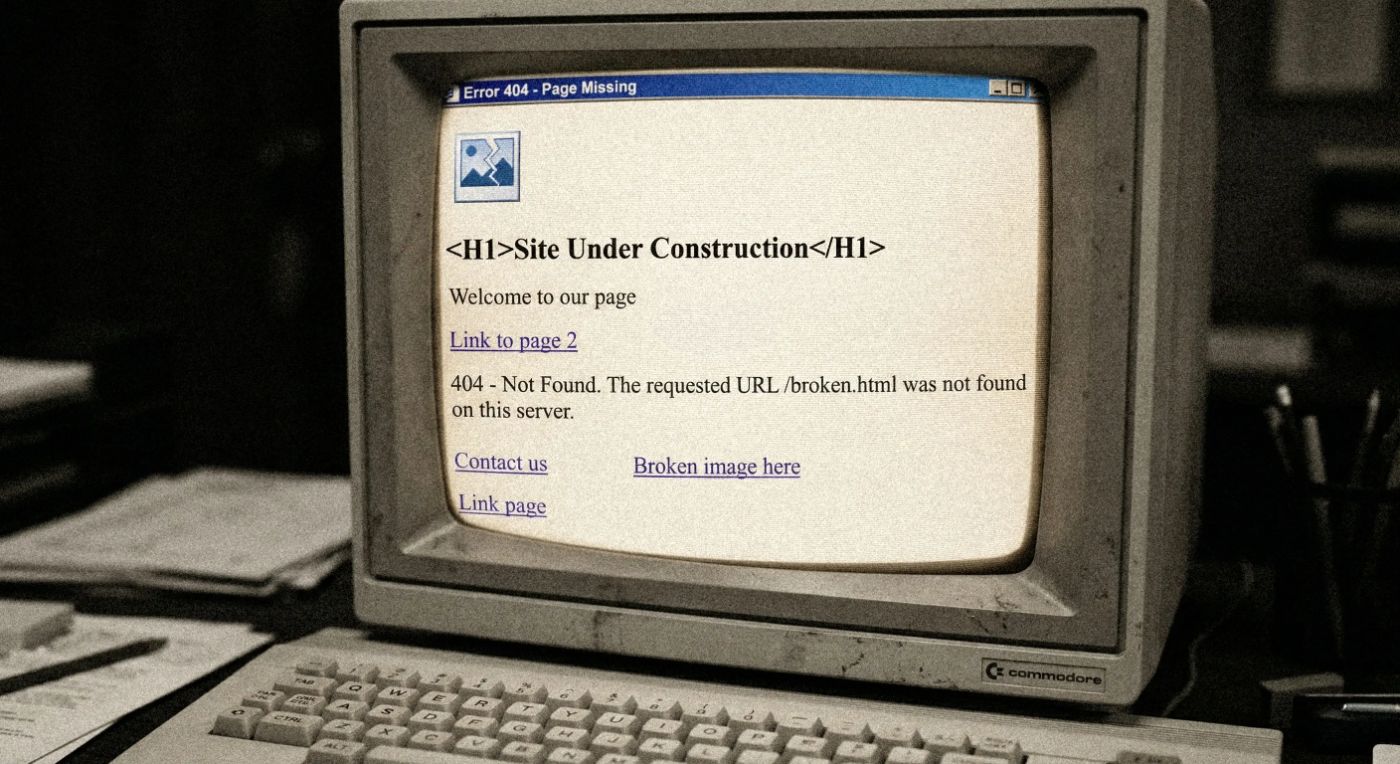
They only talk about how it looks, never how it works. Design matters, but so does function. If every conversation is about colors and fonts and no one's talking about user experience, load times, or integrations, the site might look nice and work poorly.
No maintenance plan or post-launch support. See above. If they're not offering ongoing support, they're not thinking long-term. Neither will your site.
Pricing way below market rate. Web design has a wide price range, but if someone's quoting significantly less than everyone else, there's usually a reason. You're either getting template work, or someone learning on your dime, or a scope so limited you'll pay more later to fill the gaps.
They don't ask about your existing tools. Most businesses already have systems in place. A CRM, scheduling software, payment processing, email marketing. Your website should connect to those, not ignore them. If they never ask what you're using, they're not thinking about how the site fits into your operations.
You can't see old sites that are still live. Anyone can show you a screenshot from last year. Ask to see sites they built two or three years ago. Are they still up? Still working? Still performing? If not, that tells you something about what you're buying.
Questions to Ask Before You Sign
You don't need to grill anyone, but a few good questions can save you a lot of trouble.
What platform will you build on, and why that one? There should be a reason beyond "it's what I use." Different platforms suit different needs. Make sure the choice makes sense for your business.
What's included in SEO setup? At minimum, you want keyword research, meta titles and descriptions, proper heading structure, image optimization, and schema where appropriate. If they don't know what any of that means, keep looking.
What happens after launch? Is there a warranty period? A maintenance plan? A support email? Know what you're getting before you need it.
Can I see sites you built a few years ago that are still performing? Recent work is great. But longevity tells you more about quality.
How do you handle content? Do I provide everything, or do you help? Content is usually the bottleneck. Clarify who's responsible for what.
What's your process from start to finish? A clear answer here means they've done this enough to have a system. A vague answer means you might be the experiment.
How will my site work with my existing tools? If you use a CRM, a scheduling tool, or anything else, ask how the site will connect. If they shrug, that's a problem.
Who owns the site, domain, and hosting when we're done? You should own everything. Some designers hold these hostage. Make sure that's not the deal.
What do you need from me to do this well? Good designers will tell you what they need. If they don't ask for anything, they're probably not going to dig deep enough to get it right.
What a Good Process Looks Like
Working with a web designer should feel collaborative, not chaotic. Here's a rough outline of what to expect from someone who knows what they're doing.
Discovery. This is where they learn your business. Your goals, your audience, your competitors, your existing systems. Good discovery leads to a better site.
Strategy. Before design starts, there should be a plan. What pages, what structure, what functionality, what messaging. You should be aligned before anyone opens a design tool.
Design. Mockups or prototypes of how the site will look and feel. You review, give feedback, and refine. This is collaborative.
Development. The site gets built. Depending on the platform, this might be tightly linked to design or a separate phase. Either way, you should see progress and have opportunities to review.
Launch. Testing, final review, and going live. There should be a checklist, not just "looks good, let's publish."
Support. After launch, things come up. Content changes, bug fixes, questions. You should know who to call and what it costs.
Closing Thoughts
Hiring a web designer is a real decision. The right one saves you time, helps your business grow, and builds something that works for years. The wrong one costs you twice and leaves you back at square one.
Take your time. Ask the questions. Watch for the red flags.
If you're in the market and want to talk through your project, I'm happy to have a conversation. No pressure, no pitch. Just a chance to see if we're a good fit.
[Contact link here]
Hiring a Web Designer in Springfield, MO: What to Know
7 min
You need a new website. You've started looking around, maybe asked a few people for recommendations, maybe searched "web designer Springfield MO" and ended up with a mix of agencies, freelancers, and companies that seem to do a little bit of everything.
Now you're trying to figure out who to trust with something that matters to your business.
This post is meant to help you sort through that. Not a sales pitch, just what I'd tell a friend who asked.
Why the Right Hire Matters
A website isn't a logo with pages attached. It's a different discipline.
Graphic design is about how things look. Web design includes that, but it also involves how things work. How users navigate. How fast the site loads. How search engines read and rank it. Which platform it's built on and what that means for you three years from now.
A designer who does great print work or brand identity may not understand the technical side of the web. That's not a knock on them. It's just a different skill set.
When you hire someone who doesn't specialize in websites, you often end up paying twice. Once for the original site, and again when you hire someone else to fix or replace it.
What to Look For
Someone whose focus is websites
There are plenty of talented generalists out there. But when your plumbing breaks, you call a plumber, not a handyman. Same logic applies.
Look for someone who spends most of their time building websites. Not someone who offers websites as one of fifteen services.
An understanding of the invisible stuff
A website that looks good but loads slowly, doesn't show up in search results, or doesn't work on mobile is a problem. These are the things you can't see just by looking at a portfolio.
Ask about SEO. Ask about site speed. Ask about schema and meta descriptions. If they don't know what those are, or dismiss them as "not important," that's a sign.
A clear process they can explain
Good web designers have a way of working. They should be able to walk you through what happens from first conversation to launch.
If they jump straight into mockups without learning about your business, goals, or audience, the end result is going to reflect that.
Post-launch support
Websites need maintenance. Updates, security patches, content changes, the occasional bug. If someone builds your site and disappears, you're left figuring it out yourself or paying someone new to learn how it was built.
Ask what happens after launch. Is there a maintenance plan? How do you get help when something breaks?
Willingness to learn your business
The best websites come from understanding the business they represent. What you do, who you serve, what makes you different, what problems you're solving.
A designer who asks a lot of questions up front is a good sign. They're trying to get it right, not just get it done.
Red Flags
Not every web designer is a good fit. Some aren't a good fit for anyone. Here's what to watch for.
They ghost after launch. This is more common than it should be. You sign, they build, they hand it over, and then you never hear from them again. Websites are kind of like plants; they require regular attention. Look for a designer that will be a partner long-term, and will work on behalf of your business.
No mention of SEO before you sign. If keywords, meta descriptions, and search visibility never come up in early conversations, that tells you where their priorities are. A pretty site that no one finds isn't doing its job.
They can't explain their platform choice. There are a lot of ways to build a website. WordPress, Webflow, Framer, Squarespace, Shopify, custom code. Each has tradeoffs. If they can't tell you what they're building on and why it makes sense for your situation, that's a gap.
The portfolio looks like the same template with different colors. Templates aren't inherently bad, but if every site in their portfolio looks nearly identical, you're probably not getting custom work. That matters when you want something that reflects your brand instead of theirs.
They jump straight to design without discovery. If they're showing you mockups before they've asked about your goals, your customers, or your business, they're guessing. That's not a process. That's a coin flip.
They only talk about how it looks, never how it works. Design matters, but so does function. If every conversation is about colors and fonts and no one's talking about user experience, load times, or integrations, the site might look nice and work poorly.
No maintenance plan or post-launch support. See above. If they're not offering ongoing support, they're not thinking long-term. Neither will your site.
Pricing way below market rate. Web design has a wide price range, but if someone's quoting significantly less than everyone else, there's usually a reason. You're either getting template work, or someone learning on your dime, or a scope so limited you'll pay more later to fill the gaps.
They don't ask about your existing tools. Most businesses already have systems in place. A CRM, scheduling software, payment processing, email marketing. Your website should connect to those, not ignore them. If they never ask what you're using, they're not thinking about how the site fits into your operations.
You can't see old sites that are still live. Anyone can show you a screenshot from last year. Ask to see sites they built two or three years ago. Are they still up? Still working? Still performing? If not, that tells you something about what you're buying.
Questions to Ask Before You Sign
You don't need to grill anyone, but a few good questions can save you a lot of trouble.
What platform will you build on, and why that one? There should be a reason beyond "it's what I use." Different platforms suit different needs. Make sure the choice makes sense for your business.
What's included in SEO setup? At minimum, you want keyword research, meta titles and descriptions, proper heading structure, image optimization, and schema where appropriate. If they don't know what any of that means, keep looking.
What happens after launch? Is there a warranty period? A maintenance plan? A support email? Know what you're getting before you need it.
Can I see sites you built a few years ago that are still performing? Recent work is great. But longevity tells you more about quality.
How do you handle content? Do I provide everything, or do you help? Content is usually the bottleneck. Clarify who's responsible for what.
What's your process from start to finish? A clear answer here means they've done this enough to have a system. A vague answer means you might be the experiment.
How will my site work with my existing tools? If you use a CRM, a scheduling tool, or anything else, ask how the site will connect. If they shrug, that's a problem.
Who owns the site, domain, and hosting when we're done? You should own everything. Some designers hold these hostage. Make sure that's not the deal.
What do you need from me to do this well? Good designers will tell you what they need. If they don't ask for anything, they're probably not going to dig deep enough to get it right.
What a Good Process Looks Like
Working with a web designer should feel collaborative, not chaotic. Here's a rough outline of what to expect from someone who knows what they're doing.
Discovery. This is where they learn your business. Your goals, your audience, your competitors, your existing systems. Good discovery leads to a better site.
Strategy. Before design starts, there should be a plan. What pages, what structure, what functionality, what messaging. You should be aligned before anyone opens a design tool.
Design. Mockups or prototypes of how the site will look and feel. You review, give feedback, and refine. This is collaborative.
Development. The site gets built. Depending on the platform, this might be tightly linked to design or a separate phase. Either way, you should see progress and have opportunities to review.
Launch. Testing, final review, and going live. There should be a checklist, not just "looks good, let's publish."
Support. After launch, things come up. Content changes, bug fixes, questions. You should know who to call and what it costs.
Closing Thoughts
Hiring a web designer is a real decision. The right one saves you time, helps your business grow, and builds something that works for years. The wrong one costs you twice and leaves you back at square one.
Take your time. Ask the questions. Watch for the red flags.
If you're in the market and want to talk through your project, I'm happy to have a conversation. No pressure, no pitch. Just a chance to see if we're a good fit.
[Contact link here]